02
The Eco-Village
The course’s pedagogy intends to cultivate health at all levels of the human being. Not only is the curriculum structured to cultivate life-supporting engagement, but the school environment is also designed to create a genuine, natural community lifestyle. Students will learn to take care of themselves and others, for example, by cooking, cleaning, and farming. Beyond academics, an important part of the educational experience is learning to live in and support a diverse and multifaceted community.
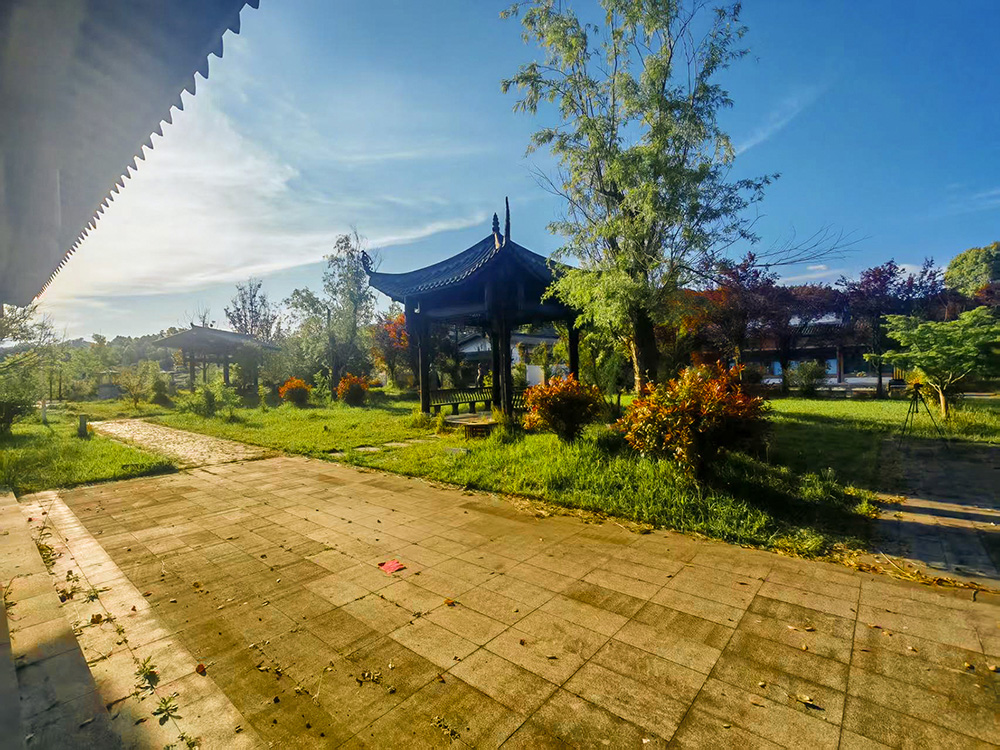
The program takes place in 智然度 "Zhì Rán Dù" (also known as 3-Dom) — an intentional eco-village in rural Guizhou, China building a wholesome foundation for human culture. Founded in 2023, it has a wide-ranging vision for developing ecological, economic, and social initiatives. Students may find the community itself to be a fascinating project with many opportunities. After the program, alumni may choose to run their new enterprises in the entrepreneurship residency on campus, leveraging the holistic community, and even becoming a mentor for future students.
03
Year One — Foundation Year
The first year draws on Waldorf and anthroposophical practice, and the purpose is to awaken and strengthen the capacities from which a healthy, self-directing individuality grows.
Each month, the daily art, science, and humanities classes rotate through a curriculum of intensive main lessons. The curriculum is designed to develop thinking, feeling, and willing capacities. The pedagogy emphasizes a living relationship to the subjects.
Here’s a sample of a daily schedule. Please note that real schedules are very variable.
Morning
Service Hour7–8
- Cleaning, cooking, or biodynamic gardening...
Science / Math9–10:30
- Physics, chemistry, biology, mathematics...
Arts11:00–12:30
- Painting, music, handwork, literature, history...
Afternoon
Humanities2:30–4
- Literature, history, drama, English, philosophy...
English Conference4:30–5:30
Movement5:45–6:15
- Tai chi, sports, martial arts...
Travel
Internship
- 2 months of internship Europe or USA.
- Students choose from a selection of inspiring social enterprises to intern at or find their own. They may go with fellow students or go by themselves.
- This period widens the students’ picture of the world and lets them meet genuinely different social values while taking responsibility and learning from a real-life ethical enterprise.
Short Visits
The class will make a number of shorter visits to successful and inspiring Chinese enterprises and organizations.
07
Technology & Artificial Intelligence
Technology
To allow students to develop a natural rhythm and relation to the real world, technology may be used in dedicated rooms on campus. This way, the community environment becomes more present and available for encounter, while time used on technology becomes intentional.
Artificial Intelligence
While understanding its ecological and societal dangers, Zhi Ran Du views AI as an important technology to be utilized skillfully for world benefit.
Much of conventional education focuses on the accumulation and synthesis of information. AI is now a more efficient and interactive way of doing this. Therefore, students will be taught effective methods to use AI for self-study and follow their own interests. AI is used to expedite the necessary processes of accumulating information, which allows more time for the more important development of original, living thinking, taught in all classes.
AI enables individuals to create organizational and digital structures in a day that previously required large teams months. This opens opportunities for individuals to specialize more freely and specifically as the economy evolves towards having more small businesses run by smaller groups. This program seeks to help young people get ahead of the curve and take this opportunity for economic and vocational independence using modern and next-generation techniques.
08
Chinese Context
For this project to exist, it must align with governmental regulations and cultural sensibilities. Many aspects of the program are tailored to these. For example, the program not only educates but actually generates fruitful ongoing economic activity, and this is essential for it to exist as an independent educational program.
The country has compulsory education with many regulations up to age 15. Eventually, about a third of students score highly enough to enter competitive university education. The other two thirds are sorted into vocational training or the workforce.
Therefore, this program offers a unique alternative at the appropriate age range for both holistic wellbeing and a genuine opportunity to author one’s own life beyond how they were categorized by the testing system. It fills a unique contextual niche, distinct from both conventional schools and existing Waldorf schools.
09
Location
Surrounded by mountains, forests, caves, and fields, it is located in the heart of Luojiang Nine-Bends Wetland Park, Suiyang, Zunyi, Guizhou. It is an hour’s drive from Hailongtun World Cultural Heritage, Broadwater Primeval Forest, and Shi’erbeihou Caves/Hot Springs.
How to Get Here
1
Take flight to Guiyang, Chongqing or Zunyi Xinzhou airport
2
Take high speed train to Zunyi station.
3
Call a didi or taxi to
智然度 (zhi ran du)
(40-50 min)